Bedding · Fabric guide
How to Choose Sferra Sheets for Your Sleep Style
A good sheet is not simply a high number printed on a label. It is a small arrangement of decisions—fiber, weave, weight, finish, fit, and care—that determines whether a bed feels cool and crisp, smooth and enveloping, or somewhere between the two.
Published October 14, 2026
Shopping for Sferra sheets can feel like entering a room where every fabric has a persuasive argument. One promises a clean, cool hand; another seems to offer softness with the ease of a well-worn shirt. Thread count enters the conversation, usually with great confidence, although it cannot tell you everything you need to know. The more useful questions are quieter: Do you tend to sleep warm? Do you like a sheet that feels smooth, or one with a little texture? Will you iron it, or would you prefer that the bed look good without negotiation?
These are not abstract preferences. The fabric closest to the body shapes the nightly experience of the bed, and the wrong choice can make an otherwise beautiful set feel like an ongoing compromise. A crisp percale may be a pleasure to someone who sleeps hot and dislikes cling; the same fabric may seem too firm to someone who wants a soft, fluid drape. Sateen may feel luxurious to one sleeper and too warm or slippery to another. Linen can be appealing for its texture and relaxed appearance, but it has a character of its own—and not everyone wants that character against the skin.
The sensible way to compare Sferra sheets is to look beyond the name of a collection or a headline number. Consider fiber, weave, finish, care instructions, and dimensions together. Each affects the others. A fabric’s label is a beginning, not a verdict.
Begin with how you sleep
Before comparing specifications, take stock of the conditions in which you sleep. Are you usually warm beneath a duvet, even in winter? Do you wake cold and reach for another layer? Do you share a bed with someone whose preferred room temperature seems to belong to a different climate? And do you like the feeling of a freshly made bed to be crisp, soft, or almost weightless?
Sleep temperature is a helpful first guide, though it is not the only one. Someone who runs warm may gravitate toward a breathable, relatively light fabric and a weave with a crisp hand. Someone who enjoys a more substantial, smooth surface may find sateen more inviting. A person who values a relaxed, tactile look may prefer linen. These are tendencies rather than guarantees: room temperature, mattress and duvet materials, humidity, personal comfort, and the way a fabric has been finished all matter.
It is also worth separating a sheet’s first impression from how it may feel after use. New cotton can feel firmer than it will after laundering. Finishing treatments and fabric construction affect that early hand, while repeated washing gradually changes the surface. If you can handle a fabric in person, do not just brush the back of your fingers over it. Let it fall across your palm. Notice whether it feels cool, slick, dry, crisp, or soft. Ask whether that is a sensation you would want for eight hours, not merely a moment in a showroom.
Percale: crisp, matte, and composed
Percale is often the first stop for sleepers who like a cool, crisp bed. It has a matte appearance and a comparatively dry, clean hand. Rather than flowing over the body, percale tends to feel like a smooth, breathable layer with a little structure. People sometimes describe it as hotel-like, but the phrase can obscure its most important feature: it is not glossy or especially drapey.
For warm sleepers, this character can be a welcome one. Percale’s surface is generally less slick and less enveloping than sateen, and its crisp feel can remain comfortable through changing seasons. That does not mean it automatically makes a bed cool; the whole bedding system matters, including the duvet, room, mattress, and the sleeper. Still, if you dislike the sensation of fabric clinging close, percale is a sensible place to begin.
It can also be a good match for someone who likes a bed to look tidy without shine. The finish is typically understated, and the fabric’s structure gives it a neat, uncomplicated appearance. The trade-off is that crispness can feel a little firm at first, and percale may wrinkle. Some people consider those creases part of its relaxed, lived-in appeal. Others would rather smooth the bed with an iron. Your reaction is useful information, not a flaw in your taste.
When comparing percale options, look at fiber content and construction as well as thread count. Long-staple cotton is often used to produce fine, durable yarns, but fiber quality is not the same thing as a complete assessment of the finished cloth. Weave, yarn, finishing, and workmanship all contribute. A single number cannot make the decision for you.
Sateen: smoother hand, softer drape
Sateen offers a different invitation. Its surface often feels smoother and more fluid than percale, with a soft sheen that can make a bed look quietly polished. The hand is usually drapier, the folds less crisp. If your ideal sheet feels soft rather than freshly pressed, sateen may seem immediately appealing.
That smoothness has a practical dimension. Sateen can feel comfortable to sleepers who prefer fabric to move easily over the body instead of holding a crisp shape. It also gives a bedroom a gentle lustre, particularly in pale colors. A simple hem or restrained detail can keep that sheen from seeming formal; the effect depends as much on the whole room as on the cloth itself.
Some sleepers who run warm find sateen too enveloping, though this is not a universal rule. Weight, finish, room conditions, and individual sensation all play a role. If you are unsure, compare a sateen swatch with percale under the same conditions. Spend time with both. The distinction often becomes clearer in the hand than it does in a product description.
Sateen can also wrinkle, though creases may appear differently than they do on percale. Check the care label before buying, especially if the fabric has a particular finish or color treatment. Gentle washing, suitable detergent, and low-heat drying can help maintain the cloth’s feel. Avoid assuming that a costly sheet requires elaborate rituals, but do follow the maker’s instructions; the label is more reliable than a generic rule circulating online.
Where linen belongs in the comparison
Linen is made from flax fiber and is valued for its texture, breathability, and relaxed appearance. It has a more visible surface than smooth cotton, and the fabric may feel substantial while still being comfortable in a range of temperatures. Linen’s creases are not incidental. They are part of the way the material behaves, and often part of its appeal.
For someone who enjoys an informal, tactile bed, linen can be an excellent choice. For someone who wants a smooth, pressed surface, it may be a source of daily irritation. Its hand can change with use and washing, becoming softer over time, but that does not mean every linen fabric feels identical or that every sleeper will come to love it. Fiber quality, weave, weight, and finishing influence the result.
Care needs particular attention. Some linen bedding is designed to be washable and worn with its natural creases; other pieces may have instructions that call for gentler handling. Read the specific label rather than applying a blanket rule to every linen item. If ironing is not part of your routine, look for a fabric whose finish and intended appearance suit that choice. A sheet that requires a habit you do not want to adopt is not low-maintenance just because it is beautiful.
Thread count, in its proper place
Thread count measures the number of threads in a square inch of fabric, but it is not a direct measure of comfort or quality. It can provide one point of comparison among similar fabrics, yet it says little by itself about the feel of the yarn, the weave, the finishing, or the sheet’s durability. Higher is not automatically better. A number can sound impressive while leaving the most practical questions unanswered.
Consider first whether the stated count refers to a fabric you would actually enjoy. A dense sateen and a crisp percale can produce different sensations even when their stated counts appear comparable. Cotton type and yarn construction matter, as do the way the fabric is woven and finished. If the description emphasizes a number but offers little information about fiber, construction, or care, treat the number as one detail rather than the entire case.
For a useful comparison, put thread count beside the other specifications: fiber composition, weave, fabric weight if supplied, country of manufacture when relevant to your decision, and care requirements. Then ask the simplest question: Does this construction seem suited to my preferences? A well-chosen sheet is not the one with the most dramatic specification. It is the one whose qualities make sense for the person who will sleep in it.
Fit is part of comfort
A sheet that slips off a mattress at night can make excellent fabric feel like a poor purchase. Before ordering, measure the mattress depth, including any topper or pad that will remain beneath the sheet. Compare that measurement with the fitted sheet’s pocket depth and check the maker’s sizing information. Mattresses vary, and a deep mattress may need a different fit from a standard one even when both are sold under the same bed-size name.
For fitted sheets, the elastic and corner construction affect how securely the sheet stays in place. A close fit should be snug without placing so much strain on the fabric that the corners pull loose. If a fitted sheet is difficult to position, or if the mattress dimensions are unusual, confirm the stated measurements before choosing. The goal is not simply to get the sheet onto the bed; it is to have it remain smooth through the night.
Flat sheets have their own practical considerations. Check the dimensions against your mattress and the amount of tuck you prefer at the foot and sides. If you use a thick duvet or like a generous fold at the top, a smaller flat sheet may feel inconvenient. Pillowcases should also be checked against pillow dimensions, especially if you use unusually full or oversized pillows. A few minutes with a tape measure can prevent a beautifully made sheet from becoming a daily nuisance.
Care: the overlooked part of the purchase
Everyday care is not a footnote. It is the routine that determines how a sheet will look and feel over time. Before buying, check the recommended water temperature, cycle, detergent, drying method, and ironing guidance. Some cotton sheets call for a gentle cycle and low heat; others may tolerate more routine washing. A specialty finish or decorative detail may require more care than a plain sheet.
Use the care instructions attached to the specific set. Advice that works for one cotton weave may be inappropriate for another, and laundering rules for linen should not be transferred automatically to sateen or embroidered bedding. Overly hot water, harsh detergents, excessive drying heat, or overcrowded machines can stress fabric. If the label advises washing similar colors separately, take that instruction seriously, especially with darker or deeply colored sheets.
Wrinkle tolerance deserves an honest assessment. If you like a smooth, pressed bed, choose a fabric and finish whose care routine you are willing to maintain. If ironing is unlikely, prioritize a relaxed surface and accept that natural creases may remain. Removing sheets from the dryer while they are still slightly damp, when allowed by the care label, may help reduce wrinkles. But the best routine is the one that follows the manufacturer’s guidance and fits your actual household.
It is wise to have more than one set in rotation. This allows a sheet to rest between uses and makes laundry day less urgent. Store clean bedding in a dry, well-ventilated place, and avoid packing it away while damp. Care cannot turn every fabric into a forever object, but steady, reasonable habits can help preserve its hand and appearance.
A practical matching guide
To simplify the decision, match your most important preference to the fabric character you want:
- If you sleep warm or prefer a crisp surface: begin by comparing percale options, paying attention to fiber, weight, and care instructions.
- If you like a smooth, softly draped feel: consider sateen, and think about whether its sheen and closer, fluid hand suit your sleep temperature.
- If you enjoy texture and a relaxed, rumpled look: explore linen, while checking its specific weight, finish, and washing guidance.
- If you share a bed: discuss what each person means by “soft,” “cool,” or “comfortable.” Those words can describe very different sensations.
- If ironing is not for you: treat wrinkle expectations as a deciding factor, not an afterthought.
- If your mattress has a topper or unusual depth: measure the complete sleeping surface before selecting fitted sheets.
This is a starting framework, not a rigid taxonomy. A warm sleeper might still prefer sateen, and someone who likes crisp bedding might discover that a particular linen has exactly the right softness. The point is to make the decision with a clear sense of what you value instead of letting a headline specification or an attractive color make it for you.
How to compare Sferra collections thoughtfully
When looking at Sferra sheets, compare like with like. Set percale beside percale, sateen beside sateen, and note where fiber or finishing differs. A collection name may help you identify a design, but it does not replace the construction details. Read the product information for each piece in a set, since pillowcases, flat sheets, and fitted sheets may have distinct dimensions or finishing details.
It can help to make a short list before browsing: preferred weave, acceptable care routine, mattress size and depth, and a realistic budget. Then narrow the options by the qualities that matter most to you. If touch is important, find a way to handle samples or fabric in person when possible. If that is not practical, look for specific descriptions of hand, weave, and finish rather than relying on general adjectives such as “luxurious” or “soft.”
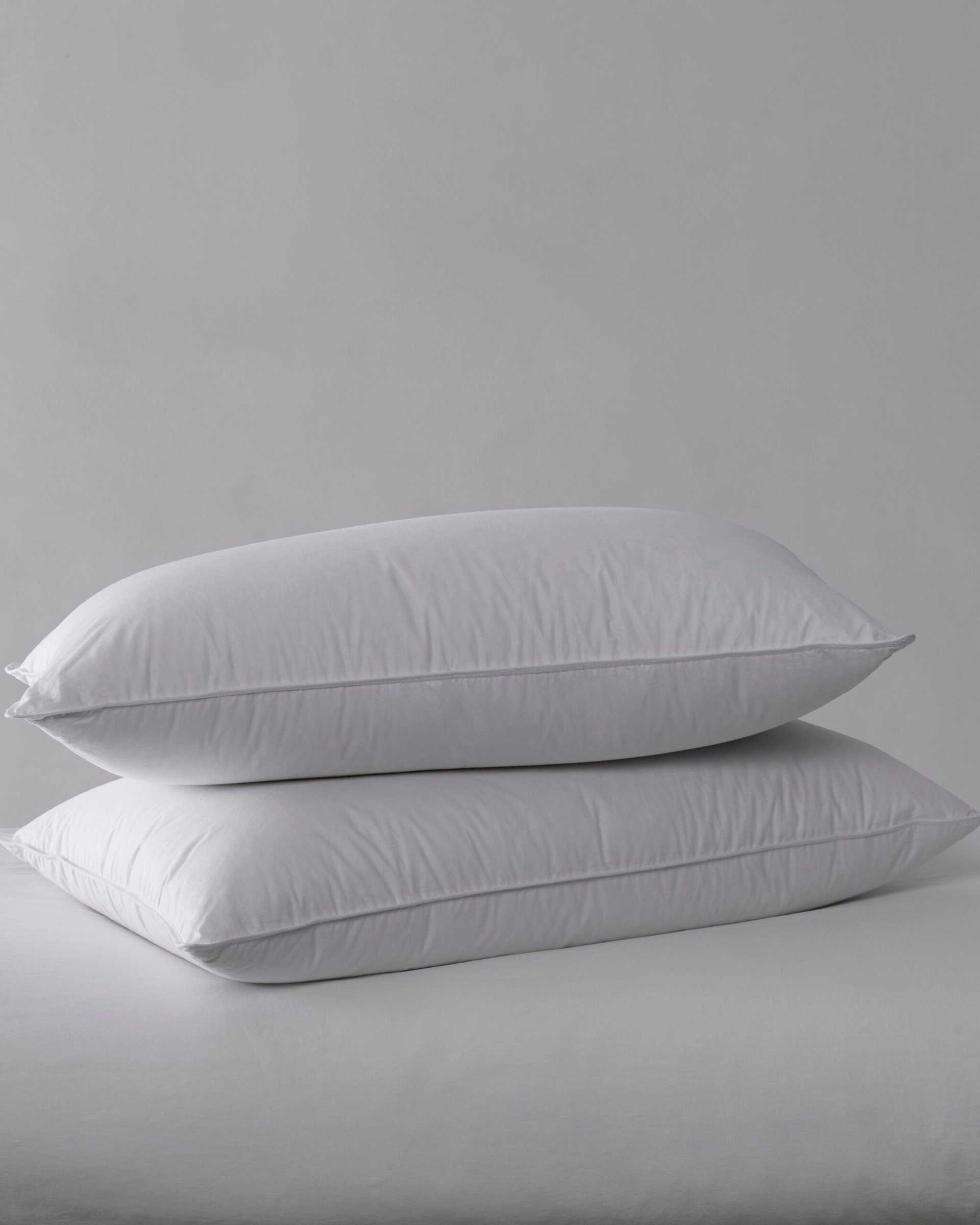
Keep the rest of the bed in view, too. A light sheet under a thick duvet may not feel cool; a breathable sheet beneath multiple insulating layers cannot manage the entire sleep climate alone. Pillow fill and pillowcase fabric affect comfort around the face and neck. A supportive pillow—for instance, one with medium support and a cotton shell—may shape how the bed feels in use, though it does not change the properties of the sheet. Bedding works as a system, and the sheet is one important part of it.
The right sheet is the one you want to use
There is no universal winner among percale, sateen, and linen. Each has a distinct surface and temperament. Percale offers crispness and a matte, breathable feel; sateen brings smoothness and drape; linen adds texture and a more relaxed character. Fiber and finishing refine those differences, while mattress fit and care habits decide whether the pleasure lasts beyond the first night.
Choose by imagining the ordinary moments, not just the idealized bedroom: climbing into bed after a warm day, changing the sheets on laundry morning, smoothing the corners over the mattress, and waking to the feel of the fabric against your skin. The best Sferra sheets for your sleep style are the ones that make those moments feel natural. Thread count may be part of the conversation. It should never be the whole conversation.